Wool Frenzy
- 4.8
- Rating
- 1.00M
- Installs
- Free
- Price

 Analysis by App-foxy
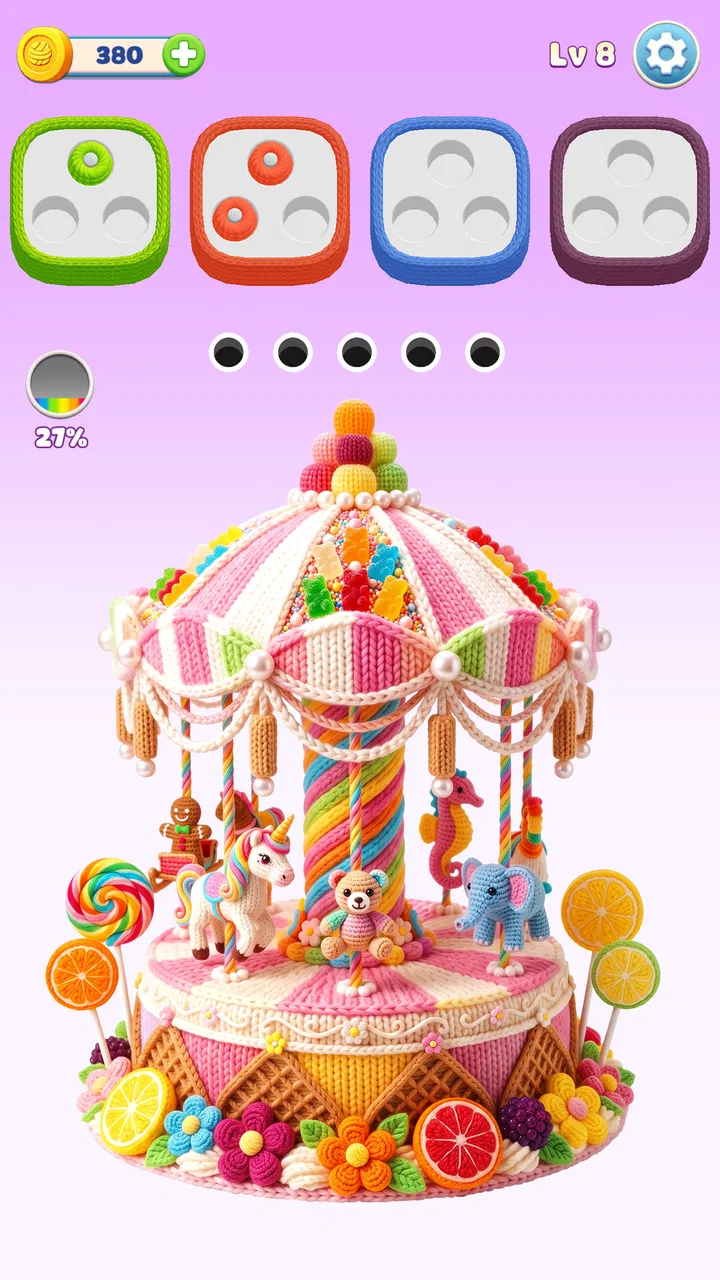
I did not expect a puzzle game about wool to be the sort of thing I would keep opening during small gaps in the day, but Wool Frenzy makes a strong first impression because its idea is easy to understand immediately. It is a free puzzle game from Shinrays Games, built around arranging and untangling cute yarn challenges in three dimensions. I can see why it has reached over a million installs and an average rating of 4.8 from roughly 38 thousand ratings: the concept is friendly, the presentation is approachable, and the basic pleasure arrives quickly.
What matters most to me here is not whether it can replace a large, story-driven game. It cannot, and it does not try to. Its appeal is the short session: open it, look at a compact wool puzzle, make a few satisfying moves, and either continue or put it down without feeling that I have abandoned a complicated adventure. That makes it a natural fit for waiting rooms, short breaks, or the few minutes before bed.
Why the first few puzzles are so easy to pick up
The central attraction is visual rather than narrative. Wool, yarn, and three-dimensional objects give each puzzle a softer personality than the usual numbered tiles or abstract blocks. I do not need a tutorial-heavy explanation to understand the goal. The board communicates that something is tangled or arranged incorrectly, and my job is to inspect it, find the useful order, and work toward a cleaner result.
You May Also Like

 Blood Strike: 2.5 Anniversary
Blood Strike’s Loadouts Turn Every Drop Into a Tactical Gamble
A close look at Blood Strike’s custom loadouts: how fast access to signature weapons reshapes its battle royale rhythm, rewards preparation, and narrows the gap between fights.

 Pandora - Music & Podcasts
Pandora’s Music Is Easy to Start, but Harder to Recover
Pandora’s strength is its low-effort path from a seed to a station. Its weak spot is how much confidence it asks you to place in connection, setup, and quiet recovery.

 8 Ball Pool
 Is Built on Rivalries, Rematches, and Routine
A close look at the rivalries, rematches, shared routines, and unanswered safety questions that turn a quick pool match into a persistent mobile community.

 Samsung Music
’s Quiet Strength Is Playing What You Already Own
Its reach comes less from spectacle than from dependable access to a personal library. That simplicity is both the app’s strongest retention engine and its ceiling.

 AccuWeather: Weather Radar
AccuWeather Review: A Quick, Clear Forecast for Everyday Decisions
For everyday plans, the best forecast is the one you can understand quickly. AccuWeather makes rain timing, radar, and local conditions easy to act on, with a few trade-offs.

 Hill Climb Racing
Why Hill Climb Racing Still Turns Crashes Into One More Run
A tiny car, a bumpy hill and one more upgrade: Hill Climb Racing keeps resurfacing because its simple chaos makes every near-miss feel personal.
More From Our News Desk
View All News


That immediate readability is important on a phone. A puzzle that requires a long explanation before the first meaningful move is a poor match for a quick session. Here, the cute wool theme does useful work: it makes the challenge feel less severe, while the three-dimensional layout gives me something to examine instead of simply tapping through a flat list of choices.
The game is rated for Everyone, which matches the gentle tone. I would be comfortable suggesting it to someone who wants a nonviolent, visually pleasant puzzle rather than an intense competitive experience. That does not mean every puzzle will feel effortless. The presentation is soft, but the satisfaction comes from noticing relationships between pieces and choosing an order that gradually reduces the mess.
Shinrays Games has also chosen a format that suits touch controls. A phone screen is good at letting me inspect a compact object, make a direct move, and see the result at once. That quick connection between action and change is one of the reasons the game works better as a casual pastime than as a demanding brain-training exercise.
A session rhythm that respects short breaks
My favorite quality is the clean rhythm between looking, acting, and reassessing. I can spend a few seconds studying the visible yarn, try a move, and immediately understand whether I have improved the arrangement. The game does not need a long warm-up before becoming enjoyable. That makes it useful when I have only a brief window, such as while waiting for a kettle to boil or sitting on public transport.
There is a practical difference between a game that technically allows short sessions and one that feels designed for them. Wool Frenzy belongs to the second group. Its individual challenges are presented as self-contained moments, so I do not feel forced to remember a complicated plot, manage a large inventory, or prepare a strategy before playing. I can simply solve what is in front of me.
The best way to play is to treat the first inspection as part of the puzzle, not as wasted time. I look for the yarn or object that appears least obstructed, then consider whether moving it will reveal something behind it. This prevents the common casual-game mistake of tapping randomly and hoping the board sorts itself out. The wool theme may look playful, but careful observation still pays off.
Another useful habit is to avoid rushing after a successful move. A piece becoming available can change the whole visual structure, and the next obvious-looking action is not always the most useful one. I get better results by pausing for a quick scan after each important change. That small discipline adds depth without turning the game into a demanding planning exercise.
For players who enjoy the feeling of organizing clutter, this is the strongest part of the experience. The pleasure is not only in finishing. It is in watching a confusing arrangement become legible. That transformation gives even a short session a beginning, middle, and end, which is more satisfying than endless tapping with no visible improvement.
What happens when real life interrupts
A casual puzzle earns my trust when I can leave it without anxiety. Wool Frenzy is well suited to interruptions because the core activity is based on a contained visual problem rather than a real-time contest. If I need to answer a message, put my phone down, or switch tasks, I am not abandoning teammates or missing a timed battle.
That interruption tolerance is a major reason I would choose it over many faster alternatives. Competitive puzzle games can be exciting, but they demand attention at the exact moment I may not have it. A more elaborate matching game may offer longer progression systems, yet it can also make a short return feel like another obligation. This one is easier to approach casually: I can come back and focus on the wool arrangement in front of me.
I still would not call it a completely mindless background activity. The puzzles need visual attention, and playing while distracted can lead to unnecessary moves or a less enjoyable experience. The right expectation is “easy to pause,” not “safe to ignore.” If I am cooking, crossing a street, or handling something that needs concentration, I would close it rather than trying to play in fragments.
For a realistic everyday example, I can imagine opening it during a ten-minute wait at a clinic. I would solve a challenge or two, stop when my name is called, and return later without needing to reconstruct a story or remember a chain of objectives. That is a modest use case, but it is exactly where the game makes sense. It fills a gap without demanding that the gap become a full gaming appointment.
The short-session design also makes the game suitable for winding down. The soft subject matter and nonviolent puzzle structure are less stimulating than an action game, although individual players will differ in how relaxing problem-solving feels. If I am already tired, I may prefer a simple challenge; if I want a deeper mental workout, I would look elsewhere.
The point where pleasant repetition becomes a limitation
The same focused design that makes Wool Frenzy approachable can also narrow its long-term appeal. Once I understand the basic pleasure of untangling and arranging wool, the experience depends heavily on how much variety I find from one puzzle to the next. The theme is memorable, but a theme alone cannot carry unlimited replay value.
I enjoy repeating the basic loop when I want a familiar type of challenge. It is similar to returning to a small desk puzzle: I know the general activity, but the arrangement in front of me still gives me something to solve. However, I would not recommend it as the only game for someone who needs constant novelty, a strong narrative, competitive rankings, or a deep character progression system.
This is also where it differs from usual alternatives in the puzzle category. Match-three games often rely on speed, cascading effects, special pieces, and a large progression structure. Word puzzles focus on language and recall. Logic games may offer stricter deduction and a more deliberate difficulty curve. Wool Frenzy sits closer to a visual organization toy with puzzle rules: its warmth and physical-looking yarn are central to the appeal, while its challenge comes from interpreting the arrangement rather than building a long strategy.
That comparison helps clarify who should choose it. If I want a quick, tactile-feeling puzzle that is easy to explain to another person, I would pick this before a dense logic title. If I want to compete against friends, chase a score, or spend an hour mastering a complex system, a different puzzle game would probably serve me better.
One non-obvious trade-off is that the cute presentation may make the game seem more disposable than it is, while the repeated structure may make it feel less substantial than a conventional puzzle campaign. I would judge it by the quality of individual moments rather than by expecting a large adventure. The question is not whether it contains enough systems to occupy an entire evening; it is whether each brief visit gives me a clear and pleasant task.
Practical details before installing
The game is free to download, which makes it easy to try without committing money first. It includes in-app purchases ranging from $0.99 to $99.99 per item, so I would pay attention to any purchase prompts and use device-level purchase protections if children might play on the phone. The Everyone rating makes the content approachable, but an age rating does not remove the need for sensible spending controls.
Compatibility is fairly broad for Android users because it requires Android 6.0 or later. The current version is 3.001, and the game was released on July 9, 2025. Those details matter if I am installing on an older device or deciding whether a family member’s phone is suitable. I would also keep expectations realistic: a newer version number does not automatically mean the game has the depth of a long-running premium puzzle series.
The visible popularity is encouraging without being a guarantee that it will suit everyone. More than a million installs show that the format has found a substantial audience, and the 4.8 average from around 38 thousand ratings suggests broad approval. I treat those figures as a useful signal, not a substitute for matching the game to my own habits. Someone who dislikes yarn-themed visuals or repetitive sorting will not suddenly enjoy it because other players rated it highly.
The free entry point is especially useful for testing that personal fit. I can play long enough to discover whether the visual style feels charming or irritating, and whether the puzzle rhythm holds my attention. If the first sessions feel satisfying but I later want more variety, I can decide then whether any optional spending is worthwhile rather than paying in advance for an experience I may not use.
Small habits that make the puzzles more satisfying
I found that the most effective approach is to separate observation from action. Before touching anything, I scan the whole arrangement and identify pieces that appear to block others. This gives me a rough plan and reduces the frustration that comes from undoing a move moments later. In a game built around visual order, a few seconds of looking can be more valuable than several fast taps.
I also avoid treating every available move as equally important. A move that creates immediate visual progress may not open the most useful area. When two choices look plausible, I prefer the one that exposes more of the board or reduces the number of objects competing for attention. This is a simple principle, but it changes the game from random interaction into a calm process of revealing information.
Another tip is to stop after a satisfying solution instead of automatically continuing. Because the game is easy to reopen, I do not need to turn every break into a long run. Ending on a completed puzzle preserves the sense that the session had a clear shape. That is particularly helpful for people who want a controlled distraction rather than an app that absorbs an entire evening.
Conversely, if I am using it for mental stimulation, I can make the same puzzles more interesting by setting a personal rule: inspect longer, use fewer corrective moves, or try to solve without relying on impulsive taps. I would not present these as official modes or hidden systems; they are simply ways I can adjust the challenge myself when the basic loop starts to feel familiar.
That flexibility is one of the game’s quiet strengths. It does not need to announce a complicated feature set to be useful. The player can decide whether the goal is relaxation, a quick distraction, or a small exercise in visual planning. The limitation is that this extra depth comes from my own approach, not necessarily from a large collection of alternative play styles.
Who will enjoy it, and who should skip it
I recommend Wool Frenzy to players who like tidy visual puzzles, soft themes, and self-contained tasks. It is a good candidate for a shared family phone, a short commute, or anyone who wants something more engaging than scrolling but less demanding than a full game session. The Everyone rating and simple premise make it approachable, while the three-dimensional wool arrangements give it enough character to stand apart from plain sorting exercises.
I would be more cautious about recommending it to someone who needs a powerful sense of progression. If your ideal puzzle game has a campaign, dramatic difficulty spikes, competitive leaderboards, or a story that keeps unfolding, this may feel too contained. The same applies if you want a game that rewards rapid reflexes. Its appeal is careful visual interaction, not speed or pressure.
It is also not the best choice for players who quickly tire of a single visual idea. The wool theme is the reason to try it, but it is also the boundary around the experience. If the texture, color palette, or untangling concept does not appeal to you, there may not be enough genre variety to compensate. In that case, a word puzzle or a more system-heavy logic game would be a better use of your time.
For me, the deciding factor is session clarity. I always know what I am looking at, what kind of progress I am trying to make, and when a short visit has reached a natural stopping point. That is more valuable than it sounds. Many mobile games make a five-minute session feel incomplete; this one is comfortable with being a small piece of the day.
My casual verdict after living with the loop
Wool Frenzy succeeds because it understands the appeal of a small, visible problem that can be improved with a few thoughtful actions. Shinrays Games has wrapped that loop in an appealing wool theme, but the real strength is the way the game gets to its point quickly and remains easy to leave. I can recommend it as a free puzzle for short breaks, quiet evenings, and players who enjoy organizing tangled visual spaces.
Its weaknesses are tied to the same simplicity. The experience may feel repetitive for players who need constant surprises, and it does not replace deeper logic games, competitive puzzlers, or story-led adventures. The optional purchase range also means I would keep an eye on spending, especially on a shared device. Those are fair reasons to skip it, not flaws that make the game unusable.
My final view is that this is best treated as a reliable pocket-sized diversion rather than a main hobby. It gives me immediate pleasure, tolerates interruptions, and offers enough replay value when I am in the mood for the same kind of visual challenge. If you want a puzzle that is clear within moments and easy to put down, this is a particularly pleasant choice. If you want complexity, competition, or a constantly changing structure, I would choose another game in the category instead.
FAQs for Wool Frenzy
01What is Wool Frenzy and how do you play it?
Wool Frenzy is a casual puzzle game centered on matching, sorting, and organizing colorful wool or yarn elements. The objective is generally to complete each level by making the correct combinations, clearing obstacles, and reaching the required target within the available moves or time. Its simple controls make it easy to start, while later stages introduce more challenging layouts and objectives.
02Is Wool Frenzy free to download and play?
Wool Frenzy can typically be downloaded and played for free, allowing you to access the main levels without an upfront purchase. However, the game may include optional in-app purchases for coins, boosters, extra lives, or other helpful items. Advertisements may also appear between levels or after certain actions. Check the store listing and the in-game purchase settings before downloading.
03Does Wool Frenzy require an internet connection?
Many of Wool Frenzy’s basic puzzle levels may be playable without a constant internet connection, which is useful when traveling or using mobile data sparingly. Nevertheless, an internet connection can be required for advertisements, cloud saving, updates, events, leaderboards, or in-app purchases. Offline availability may also vary between Android and iOS versions, so test the game after installation.
04Is Wool Frenzy suitable for children?
Wool Frenzy uses a colorful, non-violent puzzle format that may be suitable for younger players, but parents should still review the age rating and privacy information shown on the relevant app store. If the game includes advertising, social features, or in-app purchases, children may need supervision. Enabling parental controls and disabling unauthorized purchases is recommended before handing over the device.
05What should I know about ads, permissions, and device storage before installing Wool Frenzy?
Before installing Wool Frenzy, check how much free storage your device has, since the initial download may require additional space for updates and temporary files. The game may display advertisements and request permissions related to notifications, analytics, or personalized content. You can review or restrict permissions through your device settings, although limiting some options may affect rewards, notifications, or other features.
Pros
- Simple controls make the game easy to pick up and play.
- Bright visuals and animal-themed levels feel cheerful and inviting.
- Short stages work well for quick gaming sessions.
- Progression gradually introduces new challenges without overwhelming beginners.
- Offline play makes it convenient for travel or areas with limited internet.
Cons
- Some levels can feel repetitive after extended play.
- Difficulty may increase suddenly in later stages.
- Frequent ads can interrupt the gameplay experience.
- Limited strategic depth may not satisfy experienced puzzle players.
- Extra lives or boosts may encourage in-app purchases.

Wool Frenzy
Gallery